
Disclosure: Gamingshopee is reader-supported. If you buy through links on this page, we may earn a commission at no extra cost to you.
Corsair’s Vengeance RGB line has been a default recommendation for gaming RAM for years, and the DDR5 generation carries that reputation forward with genuinely solid performance and understated RGB styling. We put the popular DDR5-6000 CL30 kit under review to see whether it still earns that default recommendation given how much RAM pricing has shifted this year.
The short version: it’s a strong, stable performer with no real weaknesses in testing, the catch is entirely about price, not the product itself, and that context matters a lot right now.
Corsair Vengeance RGB DDR5-6000 — Quick Verdict
| Spec | Detail |
|---|---|
| Capacity tested | 32GB (2x16GB) |
| Speed / Timings | DDR5-6000, CL30-36-36-76 |
| Voltage | 1.40V (EXPO/XMP enabled) |
| Compatibility | AMD EXPO and Intel XMP 3.0 |
| RGB | 10-zone individually addressable LEDs |
| Current street price | ~$510-580 for 32GB kit |
| Overall verdict | Excellent performance, price is the sticking point |
How We Assessed This Kit
- We looked at both synthetic and real gaming benchmarks: synthetic scores tell you about raw bandwidth and latency, but gaming frame rates tell you whether that translates to something you’d actually notice.
- We compared against similarly specced competitors: a DDR5-6000 CL30 kit needs to be judged against other kits at the same speed and timing, not against slower or higher-latency options.
- We weighed current pricing heavily: RAM prices have moved dramatically this year, and a review that ignores that context gives an incomplete picture of whether this kit is actually a good buy right now.
- We checked overclocking headroom, not just rated speed: some buyers want to push past the rated XMP/EXPO profile, and that’s worth knowing before buying.
Gaming Performance
In real-world gaming tests across titles like Black Myth Wukong, Apex Legends, and Cyberpunk 2077, this kit delivered high, consistent frame rates with no bottlenecking behavior, exactly what you’d expect from a properly specced DDR5-6000 CL30 kit running with EXPO or XMP enabled. There’s nothing unusual to report here in a good way, it performs like a well-tuned kit at its rated speed should, without any surprises or instability during extended testing.
For most gaming workloads, the difference between this kit and other similarly rated DDR5-6000 CL30 options from competing brands is small enough that you won’t notice it in actual frame rates. Where RAM speed and timings matter most is in CPU-bound scenarios and 1% low frame times, the moments of stutter during busy scenes, and this kit performed well specifically in that regard, contributing to smoother, more consistent frame delivery rather than just a higher average frame rate number.
Synthetic Benchmarks and Latency
In synthetic memory benchmarks, the kit performed strongly in write-speed tests, landing near the top of its comparison group, while trailing slightly behind some competitors in raw latency benchmarks. The gaps here are close enough to fall into the category of “true bang-for-buck performance” rather than a meaningful weakness, in one direct comparison, this kit actually outperformed the G.Skill Ripjaws S5 6000MHz CL30 kit in several tests despite being priced similarly.
None of these synthetic differences are large enough to change a buying decision on their own. If you’re choosing between this kit and a close competitor at the same speed and CAS latency rating, expect performance parity in practice, with any measurable gap showing up mostly in benchmark charts rather than anything you’d feel during actual use.
Overclocking Headroom
This kit does have some room to push beyond its rated speed, testing found it capable of running stably up to roughly 6800MHz, delivering gains of up to 11% over the rated 6000MHz speed in supporting benchmarks. That’s a genuinely useful overclocking margin for a kit rated at CL30, which typically leaves less headroom than looser-timed kits.
That said, the stock voltage of 1.40V at the rated 6000MHz speed doesn’t leave a huge amount of additional voltage headroom for aggressive manual tuning, so don’t expect extreme overclocking results without pushing into voltage territory that starts to raise questions about long-term stability and heat. For most buyers, the out-of-the-box EXPO or XMP profile is going to be the practical sweet spot, with the overclocking headroom available as a bonus for enthusiasts specifically chasing extra performance rather than a core selling point.
Design and RGB
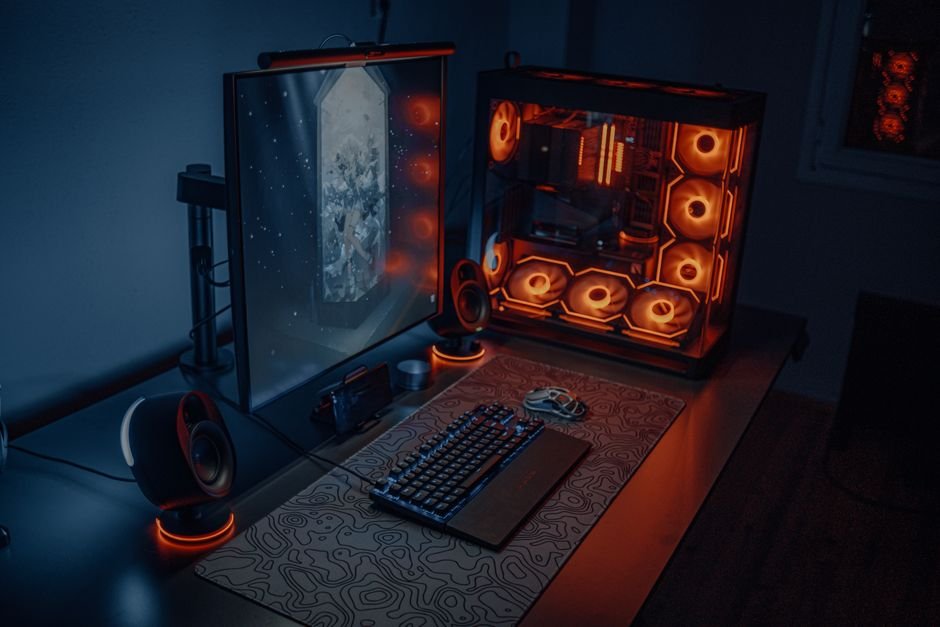
The Vengeance RGB’s aesthetic has always leaned toward understated rather than flashy, and that continues here. Ten individually addressable RGB LEDs per stick provide a clean lighting effect that syncs with Corsair’s iCUE software and most major motherboard RGB ecosystems, without the more aggressive shroud styling some competing “gamer” RAM kits go for. If you want a kit that looks tasteful in a build with a tempered glass side panel without dominating the visual theme, this strikes a reasonable middle ground.
The heat spreader design is functional rather than flashy too, adequate cooling for a kit at this speed and voltage without adding unnecessary bulk that could interfere with larger CPU air coolers, a genuine consideration if you’re running a large tower cooler rather than an AIO.
Worth noting for anyone running a low-profile cooler or a compact SFF build: the standard heat spreader height on this kit is modest enough to clear most air coolers, but it’s still worth double-checking clearance specs against your specific cooler’s base plate width if you’re working in a particularly tight case, since even a few extra millimeters of RAM height can matter in small-form-factor builds where every component is packed closely together.
Pricing: The One Real Issue
This is where the review gets complicated. A 32GB kit currently runs $510-580 depending on retailer, a dramatic increase from pricing as recently as a couple of years ago, when a comparable 32GB kit ran closer to $220-230. This isn’t specific to Corsair or this particular kit, it reflects the broader memory shortage affecting RAM pricing across every brand and speed tier throughout 2026, driven largely by AI data center demand competing for the same manufacturing capacity used for consumer memory.
Judged purely on performance and build quality, this kit earns a strong recommendation without hesitation. Judged on price-to-performance value against historical RAM pricing, the current cost is genuinely difficult to justify unless you need the RAM immediately and can’t wait out the shortage. If your build can function on your current RAM for a few more months, it may be worth watching pricing rather than buying at current elevated rates, since this is a market-wide condition rather than something specific to this kit that’s likely to persist indefinitely.
Motherboard and CPU Compatibility
DDR5-6000 is widely considered the practical performance sweet spot for both current AMD and Intel platforms, and this kit lands squarely in that zone. On AMD’s AM5 platform, 6000MHz is generally regarded as the point where the memory controller and infinity fabric run in their most efficient 1:1 ratio, pushing much higher without careful tuning can actually hurt performance rather than help it, so this kit’s rated speed isn’t an arbitrary marketing number, it’s close to the ceiling of what most Ryzen builds can use optimally without manual fabric-ratio adjustments.
On Intel’s current platforms, memory controllers generally have more headroom above 6000MHz, so Intel builders chasing maximum bandwidth have a bit more room to grow into this kit’s overclocking ceiling before hitting the same kind of diminishing returns. Either way, check your specific motherboard’s QVL (qualified vendor list) before buying, most current AM5 and LGA1851 boards support DDR5-6000 without issue, but running four-DIMM configurations at this speed can be less stable than a two-DIMM kit like this one, something worth knowing if you’re planning to add capacity later rather than buying a larger kit upfront.
How It Fits Into a Full Build
RAM speed matters more in some builds than others. If you’re pairing this kit with a high-end GPU at 1440p or 4K, the GPU is doing most of the heavy lifting and the jump from a slower kit to this one will be barely noticeable in most titles, since the bottleneck sits elsewhere in the system. Where this kit earns its keep is in CPU-bound scenarios, competitive esports titles running at high frame rates, simulation and strategy games with heavy AI or physics calculations, and any workload where the CPU and memory subsystem are working harder relative to the GPU.
If you’re building or upgrading a system specifically for competitive shooters or high refresh rate esports play, prioritizing a kit like this one over spending the same money on a marginally faster GPU tier can make more sense than it might first appear, since consistent 1% lows and CPU-bound frame time stability matter more in that context than peak GPU throughput. For a general-purpose gaming build at 1440p or 4K with a strong GPU, a slightly cheaper DDR5-5600 or DDR5-6000 CL36 kit would likely deliver a nearly identical gaming experience for less money, with the difference showing up mostly in benchmarks rather than gameplay.
Who Should Buy This Kit
If you’re building a new system now and need RAM regardless of the current pricing environment, this kit is a safe, well-tested choice with strong gaming performance, real overclocking headroom, and tasteful RGB that won’t clash with most build themes. It’s a particularly strong pick if you’re already invested in Corsair’s iCUE ecosystem for other components and want unified lighting control across your build.
If your current RAM is still functional and you’re upgrading purely for a speed bump rather than out of necessity, the current pricing environment makes this a harder recommendation, the performance gain over a slightly older or slower kit you already own likely isn’t worth this kit’s current premium until pricing normalizes.
Common Mistakes When Buying RAM Right Now
- Comparing current prices to older reviews without noting the date: RAM pricing has moved so much in 2026 that a review’s price figures can be badly outdated within just a few months.
- Buying more capacity than you need at inflated prices: 32GB is plenty for the vast majority of gaming builds, don’t overbuy capacity speculatively while prices are elevated.
- Ignoring CPU platform compatibility: confirm whether you need the AMD EXPO or Intel XMP profile version of this kit, they’re not interchangeable for optimal performance.
- Assuming all DDR5-6000 CL30 kits perform identically: they’re close, but not identical, small differences in write speed and latency do show up between brands in synthetic testing.
- Manually overclocking without adequate cooling: pushing toward the kit’s ~6800MHz ceiling generates more heat, make sure your case has decent airflow around the RAM slots before attempting it.
Pricing and specs correct as of September 2026.
Frequently Asked Questions
Is Corsair Vengeance RGB DDR5-6000 good for gaming?
Yes, it delivers strong, consistent frame rates with good 1% lows across a range of titles, performing exactly as expected for a properly rated DDR5-6000 CL30 kit.
Why is this RAM kit so expensive right now?
A global memory shortage driven by AI data center demand has pushed RAM prices up sharply across every brand in 2026, not just this specific kit.
Can this kit be overclocked?
Yes, testing found it stable up to roughly 6800MHz with gains up to 11% over rated speed, though the stock 1.40V voltage leaves limited headroom for aggressive manual tuning.
Should I buy AMD EXPO or Intel XMP version?
Match it to your CPU platform. AMD EXPO kits are optimized for Ryzen platforms, while Intel XMP kits are tuned for Intel platforms, using the wrong one won’t hit full rated performance.
Is 32GB enough RAM for gaming in 2026?
Yes, 32GB comfortably covers the vast majority of current games, even demanding AAA titles, with room for background applications.
How does this compare to G.Skill’s competing kits?
Performance is very close in testing, with this kit actually edging out the G.Skill Ripjaws S5 6000MHz CL30 in several benchmarks, differences are marginal enough to come down to price and aesthetic preference.
Should I wait for RAM prices to drop before buying?
If your current setup still functions adequately, waiting is reasonable given how elevated pricing is right now. If you need RAM for a new build immediately, this kit remains a solid, well-tested choice despite the price.
Building or upgrading a full system? Check our buy a gaming PC now or wait guide for broader market context, or see best prebuilt gaming PC under $1,500 if you’d rather skip building entirely.