
Disclosure: Gamingshopee is reader-supported. If you buy through links on this page, we may earn a commission at no extra cost to you.
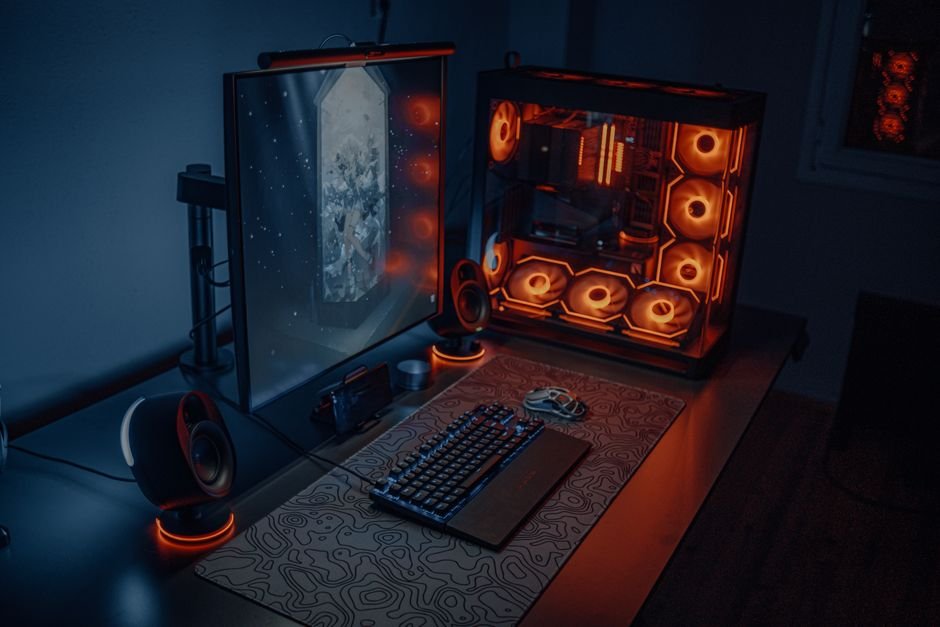
OLED gaming monitors have dropped significantly in price throughout 2026, putting this decision in front of far more buyers than it used to reach. Both panel technologies have genuine, well-documented strengths, and the right answer depends more on how you actually use your monitor than on which one has better marketing, or which one you’ve seen more forum arguments about.
Here’s the honest comparison: where OLED wins clearly, where IPS still makes more sense, and how to decide for your specific setup based on how and where you actually game.
OLED vs IPS for Gaming — Quick Verdict
| Category | OLED | IPS | Winner |
|---|---|---|---|
| Response time | 0.01-0.03ms, no overdrive needed | Typically 1-3ms | OLED |
| Contrast and black levels | Per-pixel lighting, true blacks | Backlight bleed, gray blacks | OLED |
| Full-screen brightness | Lower, limited by ABL | Higher, more consistent | IPS |
| Burn-in risk | Real but reduced by protections | Effectively none | IPS |
| Bright room / sunlight use | More reflective, ABL dims content | More legible | IPS |
| Price at comparable size/refresh | Higher, though gap has narrowed | Lower | IPS |
How We Compared These
- We separated marketing claims from documented real-world behavior: both burn-in fears and OLED hype have been overstated at different points, we focused on what current testing actually shows.
- We weighed usage patterns as heavily as raw specs: a monitor’s real-world performance for you depends enormously on what you actually do with it, not just its lab numbers.
- We checked both gaming-specific and mixed-use scenarios: plenty of buyers use one monitor for gaming, work, and browsing, we didn’t evaluate this as a pure gaming decision in isolation.
- We accounted for 2026 pricing specifically: the price gap between these technologies has narrowed significantly this year, changing the calculus from even a year or two ago.
Burn-In: A Real Risk, But a Smaller One Than You’ve Heard
Burn-in on modern OLED monitors has been significantly reduced through more durable panel materials and better voltage tuning, combined with built-in protections like pixel shifting, automatic brightness limiting, logo dimming, and periodic pixel refresh cycles. Real-world long-term testing on review units used aggressively for 18 months has shown no measurable burn-in in several cases, a meaningful improvement over the anxiety that surrounded early OLED gaming monitors.
That said, the risk isn’t zero, and it’s specifically tied to static content staying in the exact same position on screen for extended periods: game HUD elements, minimaps, taskbars, browser tabs, and streaming overlays are the usual suspects. If your usage pattern regularly keeps the same UI elements parked in the same spot for hours at a time without any content variation, OLED asks for a bit more usage awareness than IPS does. IPS panels, by contrast, don’t suffer from burn-in in normal use at all, since the backlight is physically separate from the LCD layer, you can leave static content on screen indefinitely without long-term risk.
Brightness and Bright-Room Usability
This is where IPS still has a genuine, often underestimated advantage. OLED panels deliver excellent peak brightness in small highlight areas, which is exactly what makes HDR content look so striking, but their full-screen sustained brightness generally runs lower than high-end IPS or mini-LED monitors. In a bright living room, a sunlit office, or any room with significant ambient light, an IPS monitor tends to stay more legible, with fewer issues from screen reflections and less aggressive automatic brightness limiting kicking in during bright scenes.
If your setup is in a dedicated, controllable-lighting room, this disadvantage matters less. If you’re gaming in a bright space during the day with windows nearby, it’s a genuinely practical consideration that doesn’t show up on a typical spec sheet comparison.
Motion Clarity and Response Time
OLED’s response time advantage is not a marketing exaggeration. OLED panels typically run in the 0.01-0.03ms range with no overdrive tuning required, while even excellent IPS panels typically land in the 1-3ms range. This difference is genuinely perceptible during fast motion, contributing to the smoother, cleaner look people specifically associate with OLED gaming displays, less ghosting and blur during quick camera pans or fast target tracking.
Combined with per-pixel lighting delivering true blacks and effectively infinite contrast, rather than the backlight bleed and grayish blacks that limit even good IPS panels, OLED’s overall visual package for gaming is genuinely superior on the metrics that matter most during actual play. This is the core reason OLED has become the default recommendation for dedicated gaming displays wherever budget allows.
Price: The Gap Has Narrowed, But Hasn’t Closed
2026 has seen OLED and QD-OLED gaming monitor prices fall dramatically, with genuinely excellent 4K OLED panels now available for well under $700 and 27-inch 1440p OLED options dropping into more mainstream price territory. IPS still generally wins on pure price-per-dollar, especially at the budget end where sub-$200 IPS panels now deliver 240Hz refresh rates and even 1440p resolution.
If your budget is genuinely tight, IPS remains the more accessible way into a capable gaming display. If you have some flexibility and gaming visual quality is a real priority, the price gap in 2026 is narrow enough that OLED’s advantages in contrast and response time are within reach for many more buyers than in previous years.
Which Should You Actually Buy?
For dedicated gaming, especially in a room where you can control lighting, OLED is the better choice if your budget allows it, the response time and contrast advantages genuinely improve the gaming experience in ways you’ll notice during actual play. For mixed use, gaming alongside significant work, browsing, or use in a bright room, IPS remains a strong, sensible choice, you avoid burn-in considerations entirely and get better bright-room legibility, without feeling like you’ve settled for a meaningfully worse gaming experience.
If you’re still unsure, think about your actual room and habits rather than the technology hype in either direction: a dark or controllable-lighting gaming room favors OLED, a bright multi-purpose office setup favors IPS, and a genuinely tight budget makes IPS the more practical default regardless of room lighting. Also consider how long you plan to keep the monitor and whether your usage habits genuinely involve leaving static content on screen for extended stretches, someone who mostly plays full-screen games and closes their browser tabs between sessions faces a very different practical burn-in risk than someone who works with the same static dashboard open for eight hours a day alongside gaming in the evening.
Color Accuracy and HDR
Both panel technologies have improved dramatically in color accuracy over the past few years, but they achieve their results differently, and that matters for HDR specifically. OLED’s per-pixel lighting means it can display a bright highlight directly next to a completely dark area with no bleed or halo effect, exactly the kind of high-contrast scene HDR content is built around. This gives OLED a genuine edge in HDR image quality even at more modest brightness certifications than competing IPS panels.
IPS panels rely on a shared backlight, and even with local dimming zones on higher-end models, they can’t isolate contrast the way OLED does at the pixel level, leading to visible blooming or halos around bright objects on dark backgrounds. For color-critical work outside of gaming, high-end IPS panels remain excellent and sometimes edge out OLED on specific color accuracy benchmarks, but for HDR gaming specifically, OLED’s structural advantage is difficult for IPS to fully overcome regardless of backlight sophistication.
Longevity and Long-Term Panel Health
Beyond burn-in specifically, it’s worth considering how each panel type ages over years of regular use. IPS panels are a mature, well-understood technology with a long track record of reliable performance over many years, backlight degradation happens gradually and predictably. OLED panel longevity has improved substantially with newer generations, and manufacturer burn-in warranties, often multi-year, reflect real confidence in how these panels hold up under normal gaming use rather than aggressive worst-case static content scenarios.
Neither technology should be considered a short-lived investment when bought from a reputable manufacturer and used sensibly. If long-term reliability under unusual or extreme static-content use cases is your top priority above all else, IPS remains the more conservative choice, but for typical gaming and mixed use, modern OLED panels are built to hold up well over a multi-year ownership period too. Warranty length is a useful proxy here, manufacturers offering multi-year burn-in coverage on their OLED gaming monitors are effectively backing up their durability claims with a financial guarantee, worth checking specifically when comparing models within the OLED category.
Common Mistakes When Choosing Between OLED and IPS
- Dismissing OLED entirely over outdated burn-in fears: modern protective features have meaningfully reduced this risk for normal gaming use, don’t rule it out based on years-old horror stories.
- Ignoring room lighting when choosing a panel: OLED’s full-screen brightness disadvantage matters far more in a bright room than a dark one, factor in your actual space.
- Assuming IPS is a meaningfully worse gaming experience: a good IPS panel still delivers excellent gaming performance, it’s a real trade-off in specific areas, not a downgrade across the board.
- Overlooking usage habits that increase burn-in risk: if you regularly leave static HUDs or overlays on screen for hours without variation, that’s worth factoring into an OLED decision specifically.
- Comparing old pricing rather than current 2026 prices: the OLED-to-IPS price gap has narrowed significantly this year, don’t rule out OLED based on outdated price assumptions.
- Choosing based on brand reputation alone: panel quality varies meaningfully between specific models within each technology, check independent reviews for the exact model rather than assuming all OLED or all IPS panels perform identically.
- Not checking the specific burn-in warranty terms: coverage length and conditions vary between OLED manufacturers, read the actual warranty terms rather than assuming all OLED monitors are protected equally.
Prices and specs correct as of November 2026.
Frequently Asked Questions
Is OLED better than IPS for gaming?
For dedicated gaming with controllable room lighting, yes, OLED’s response time and contrast advantages are genuinely noticeable during play, though IPS remains a strong choice for mixed use or bright rooms.
Is OLED burn-in still a real concern in 2026?
The risk is real but significantly reduced by modern panel protections, it mainly matters if you regularly leave static content in the same screen position for extended periods without variation.
Why would I choose IPS over OLED if OLED performs better in gaming?
IPS wins on full-screen brightness, bright-room legibility, price, and eliminates burn-in risk entirely, all genuine advantages depending on your setup and budget.
Has the price gap between OLED and IPS closed in 2026?
It’s narrowed significantly but hasn’t closed, IPS still generally wins on pure price-per-dollar, especially at the budget end of the market.
Is OLED worth it for office or productivity use?
Generally no, if productivity is your main use case, a good IPS panel delivers excellent results at a lower price without OLED’s burn-in and bright-room brightness considerations.
Does OLED need special care to avoid burn-in?
Not extensive care, but enabling built-in pixel refresh features and avoiding hours of unchanging static content at high brightness is sensible practice, most of this happens automatically on modern panels without you needing to think about it.
Which panel type has better motion clarity?
OLED, its 0.01-0.03ms response time meaningfully reduces ghosting and blur during fast motion compared to IPS’s typical 1-3ms range.
Should I buy OLED or IPS for a bright room with lots of sunlight?
IPS, its higher sustained full-screen brightness and lower reflectivity make it more legible in bright ambient light than OLED’s automatic brightness limiting allows.
Can I reduce OLED burn-in risk with settings changes?
Yes, enabling your monitor’s built-in pixel refresh or orbit feature when prompted, using auto-brightness limiting rather than disabling it, and varying static UI elements when possible all meaningfully reduce risk during normal use.
Weighing other panel technologies too? See our IPS vs VA vs TN panel comparison, or check our best gaming monitor 2026 hub for picks across every panel type and budget.
If you’re weighing this decision, it’s also worth reading OLED Gaming Monitors: Burn-In Risk and Is It Worth It in 2026.
This pairs well with our guide, Best Gaming Monitor 2026.