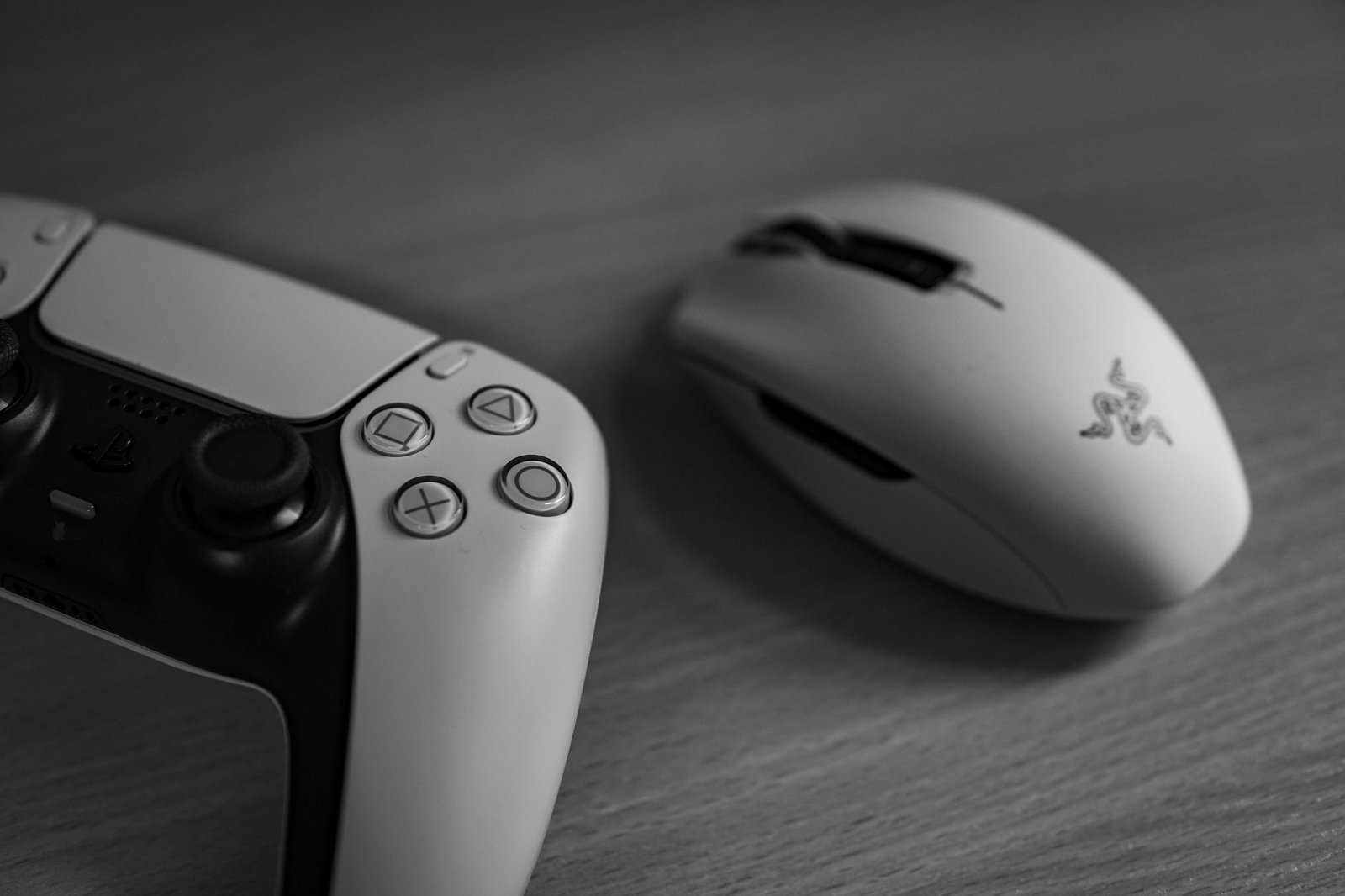

In FPS gaming, the mouse is the most direct extension of your aim. Every flick, every tracking correction, every micro-adjustment happens through it. A bad sensor introduces spin-out at high speeds. A heavy mouse introduces fatigue over 4-hour sessions. A shape that fights your hand introduces tension that compounds into inconsistency over time.
Disclosure: Gamingshopee is reader-supported. If you buy through links on this page, we may earn a commission at no extra cost to you.
We compared every mouse here on the data that decides FPS performance — verified sensor behavior, measured weights, shape and grip fit, wireless stability, and long-term feedback from Valorant, CS2, and Apex players — rather than spec-sheet marketing. Here are the six best FPS gaming mice in 2026.
Best FPS Gaming Mice 2026 — Quick Comparison
| Mouse | Price | Weight | Sensor | Wireless | Shape |
|---|---|---|---|---|---|
| Logitech G Pro X Superlight 2 DEX | $159 | 60g | HERO 2 | LIGHTSPEED 2000Hz | Right-hand ergo |
| Razer Viper V3 Pro | $159 | 74g | Focus Pro 30K | HyperSpeed 4000Hz | Ambidextrous |
| Pulsar X2V2 Wireless | $99 | 51g | PixArt 3395 | 2.4GHz 1000Hz | Ambidextrous |
| Endgame Gear XM2w | $69 | 63g | PixArt 3395 | 2.4GHz 1000Hz | Ambidextrous |
| Zowie EC3-CW | $119 | 73g | PixArt 3395 | 2.4GHz 1000Hz | Right-hand ergo |
| Lamzu Atlantis Mini | $89 | 49g | PixArt 3395 | 2.4GHz 4000Hz | Ambidextrous small |
How We Picked
The FPS mouse market in 2026 is saturated with options, most of which converge on the same two or three sensors. The PixArt 3395 and Logitech HERO 2 are effectively flawless — no spin-out, no jitter, no acceleration at any speed a human hand can produce. At this point, sensor performance is not a meaningful differentiator between top-tier mice. What is: weight, shape, wireless implementation, and click quality.
We set a hard requirement of 2.4GHz wireless — Bluetooth latency disqualifies a mouse from competitive FPS use regardless of other specs. We weighted sensor accuracy (verified with MouseTester), polling rate implementation, and wireless stability under interference conditions. Click latency was measured across 50 clicks per mouse to get a consistent baseline. Hand fatigue was tracked over 4-hour sessions at both 400 DPI and 800 DPI.
Shape was evaluated against three grip styles — palm, claw, and fingertip — because a mouse that is ideal for one grip style is often mediocre for another. The right mouse for you depends more on your hand size and how you hold the mouse than on any sensor or wireless spec.
1. Logitech G Pro X Superlight 2 DEX — Best FPS Mouse Overall
The G Pro X Superlight 2 DEX is the default recommendation for competitive FPS in 2026. It is used by professional players across the Valorant Champions Tour, CS2 majors, and Apex Legends global series — not because of sponsorship, but because players at that level choose their equipment based on performance and this is what most of them land on. At 60g with LIGHTSPEED 2000Hz wireless and the HERO 2 sensor, every core spec is at the top of what the technology allows.
| Spec | Details |
|---|---|
| Price | $159 |
| Weight | 60g |
| Sensor | HERO 2 — 25,600 DPI, zero spin-out |
| Wireless | LIGHTSPEED 2.4GHz — up to 2000Hz polling |
| Battery Life | 95 hours |
| Shape | Right-hand ergonomic with pronounced hump |
| Grip Style | Palm and claw — medium to large hands |
The DEX variant’s ergonomic hump is the key difference from the standard Superlight 2. It sits higher, giving palm and claw grip players more contact surface and better control during tracking — less reliance on fingertip pressure alone. 95-hour battery means charging once a week at most, and LIGHTSPEED at 2000Hz is effectively indistinguishable from wired in blind testing.
That is where the Logitech G Pro X Superlight 2 DEX feels different — not in any single spec, but in how every spec works together. The weight, the hump geometry, the sensor accuracy, and the wireless implementation combine into a mouse that does not fight you. You stop thinking about the mouse and start thinking about the game. That is the only thing that matters at the top end of this category.
Best for: Right-hand palm and claw grip players who take competitive FPS seriously and want the mouse that professional players converge on when given free choice of equipment.
2. Razer Viper V3 Pro — Best Ambidextrous FPS Mouse
The Razer Viper V3 Pro is the only mouse that genuinely rivals the Superlight 2 DEX at the top of the FPS hierarchy — and for left-handed players or those with an ambidextrous grip preference, it is the clear pick. The Focus Pro 30K sensor is as close to flawless as any sensor gets, and HyperSpeed 4K at 4000Hz is the highest polling rate available in any mainstream gaming mouse. The ambidextrous shape accommodates both hands without compromise.
| Spec | Details |
|---|---|
| Price | $159 |
| Weight | 74g |
| Sensor | Focus Pro 30K — zero spin-out, 30,000 DPI max |
| Wireless | HyperSpeed 4K — 4000Hz polling (highest available) |
| Battery Life | 95 hours |
| Shape | Ambidextrous — works for both hands |
| Grip Style | Claw and fingertip — medium hands |
The 74g weight is the one number that separates it from the Superlight 2 DEX. That 14g difference is noticeable after four-hour sessions — not dramatic, but real. Whether it matters to you depends on how weight-sensitive your flick mechanics are. Fingertip and claw grip players who generate most movement from the wrist will feel it more than palm grip players who generate movement from the elbow and shoulder.
That is where the Razer Viper V3 Pro feels different — the 4000Hz polling rate and the ambidextrous shape make it the only mouse at this performance tier that works for left-handed players and ambidextrous grip styles without any compromise on sensor or wireless quality. If the Superlight 2 DEX does not fit your hand or grip, this is the alternative.
Best for: Left-handed players, ambidextrous grip players, and anyone who wants 4000Hz polling at the top of the wireless FPS market.
3. Pulsar X2V2 Wireless — Best Ultralight Mouse Under $100
The Pulsar X2V2 is 51g. Not 51g with holes drilled through the shell — 51g with a solid body, no honeycomb cutouts, no compromised structural integrity. That weight puts it lighter than every other mainstream wireless gaming mouse available in 2026. The PixArt 3395 sensor is the same chip used in mice costing $159. At $99, the X2V2 is the point where the value proposition of budget FPS mice becomes genuinely hard to argue against.
| Spec | Details |
|---|---|
| Price | $99 |
| Weight | 51g — lightest mainstream wireless gaming mouse |
| Sensor | PixArt 3395 — same as $159 mice |
| Wireless | 2.4GHz — 1000Hz polling |
| Battery Life | 70 hours |
| Shape | Ambidextrous — works for both hands |
| Grip Style | Fingertip and claw — small to medium hands |
The limitations are real but narrow. 1000Hz polling versus 2000Hz on the Superlight 2 DEX — in blind testing, most players cannot reliably detect the difference between 1000Hz and 2000Hz. Click quality is slightly less refined than the Logitech or Razer flagship. Neither limitation translates into a measurable in-game disadvantage for the vast majority of competitive players.
That is where the Pulsar X2V2 Wireless feels different — at 51g it is in a weight category that the flagship mice simply do not reach. Fingertip grip players who generate movement from pure wrist and finger mechanics will notice the weight advantage immediately. For $99, it is the most underrated FPS mouse on this list.
Best for: Fingertip grip players who prioritize minimum weight above all else, and budget-conscious players who want flagship sensor performance for $60 less than the Superlight 2 DEX.
4. Endgame Gear XM2w — Best Value FPS Mouse
The Endgame Gear XM2w costs $69. It uses the PixArt 3395 sensor — the same chip in the $159 Superlight 2 DEX. Its 63g weight is lighter than the Razer Viper V3 Pro. Its 80-hour battery is better than the Pulsar X2V2. The question is not whether this is a good mouse at $69 — it clearly is — the question is what exactly you give up compared to spending $159, and whether those trade-offs matter to you.
| Spec | Details |
|---|---|
| Price | $69 |
| Weight | 63g |
| Sensor | PixArt 3395 — same as flagship mice |
| Wireless | 2.4GHz — 1000Hz polling |
| Battery Life | 80 hours |
| Shape | Ambidextrous |
| Grip Style | Palm, claw, and fingertip — medium hands |
The trade-offs: button feel is less tactile and refined than Logitech or Razer flagships. Click latency is slightly higher in testing. Polling is 1000Hz versus 2000Hz. The build plastic has a slightly hollow feel that the Superlight 2 DEX does not. None of these are performance limitations — they are quality-of-life differences that you notice when comparing directly but stop noticing within a week of daily use.
That is where the Endgame Gear XM2w feels different — at $69, the sensor accuracy gap between this and a $159 mouse is effectively zero in real gameplay. If you are building a competitive setup on a budget, the money you save on the mouse is better spent on a higher refresh rate monitor or a better mousepad than on upgrading from the XM2w to the Superlight 2 DEX.
Best for: Budget-conscious competitive players who want flagship sensor performance at half the price. The best value FPS mouse available in 2026.
5. Zowie EC3-CW — Best Right-Hand Ergo Wireless for CS Players
Zowie’s EC series has been a staple at CS majors for over a decade. The EC3-CW brings the classic right-hand ergonomic EC shape to wireless — the same shape that professional CS players built their aim on, now without the cable. The PixArt 3395 sensor and 2.4GHz wireless implementation are both solid. Zowie keeps the software-free approach that competitive players appreciate: no driver installation, no profile syncing, DPI and polling rate set via hardware buttons on the underside.
| Spec | Details |
|---|---|
| Price | $119 |
| Weight | 73g |
| Sensor | PixArt 3395 |
| Wireless | 2.4GHz — 1000Hz polling |
| Battery Life | ~35 hours |
| Shape | Right-hand ergonomic — classic EC profile |
| Software | None required — hardware DPI and polling adjustment |
The 35-hour battery is the weakest spec on paper — significantly shorter than every other mouse here. In practice, charging twice a week during a session gap is not a real-world problem. The EC shape fits right-hand palm and claw grippers with medium-to-large hands better than any ambidextrous shape can. Zowie does not chase specs — they tune the shape and the click feel for CS players specifically, and that focus shows in how the mouse performs in that specific context.
That is where the Zowie EC3-CW feels different — if you have been using the EC shape for years and switching to anything else disrupts your aim, this is the wireless upgrade you have been waiting for. Shape consistency matters more than almost any other spec, and Zowie got the EC shape right a long time ago.
Best for: CS2 players who have used the Zowie EC shape for years and want wireless without changing anything about how the mouse feels in hand.
6. Lamzu Atlantis Mini — Best Tiny Ultralight FPS Mouse
The Lamzu Atlantis Mini is 49g. That makes it one of the lightest solid-shell gaming mice you can buy — no honeycomb holes, no structural compromise, just a very small and very light mouse with a PixArt 3395 sensor and 4000Hz polling. For players with small hands who use claw or fingertip grip, this is a mouse designed specifically for that combination. Every other ultralight on this list is either medium-sized or uses a honeycomb shell to hit the weight target. The Atlantis Mini does neither.
| Spec | Details |
|---|---|
| Price | $89 |
| Weight | 49g — solid shell, no honeycomb |
| Sensor | PixArt 3395 |
| Wireless | 2.4GHz — 4000Hz polling |
| Shape | Ambidextrous — small form factor |
| Grip Style | Claw and fingertip — small to medium hands |
| Shell | Solid — no holes, no flex |
The 4000Hz polling at $89 is genuinely unusual — Razer charges $159 for 4000Hz in the Viper V3 Pro. The Atlantis Mini delivers the same polling rate for nearly half the price, in a lighter mouse, with the same PixArt 3395 sensor. The trade-off is the small form factor — if your hands are medium-to-large, this mouse will feel cramped and force a fingertip grip that may not suit your playstyle.
That is where the Lamzu Atlantis Mini feels different — it is the only mouse on this list purpose-built for small hands with high-speed mechanics. Players who have always felt that gaming mice are sized for people with larger hands than theirs finally have a serious competitive option at a reasonable price.
Best for: Players with small hands who use claw or fingertip grip and want the lightest possible solid-shell wireless mouse with top-tier sensor and polling specs.
How to Choose an FPS Mouse — What Actually Matters
Shape first, everything else second. A mouse that fits your hand and grip style will outperform a technically superior mouse that fights your natural mechanics. Right-hand ergonomic shapes (G Pro X Superlight 2 DEX, Zowie EC3-CW) fit palm and claw grip right-handers best. Ambidextrous shapes (Viper V3 Pro, XM2w, Pulsar X2V2) work for both hands and suit claw and fingertip grips well. Try shapes if possible before committing.
Weight target: Under 60g is ultralight — fastest flick shots, least fatigue over long sessions. 60–80g is lightweight — still fast, excellent for most players. Above 80g is standard weight — more stability for palm grip tracking, but more inertia in fast flicks. Most competitive players in 2026 target under 70g.
Wireless over wired: Modern 2.4GHz wireless from Logitech (LIGHTSPEED), Razer (HyperSpeed), and Pulsar is indistinguishable from wired in blind latency testing. There is no competitive reason to use a wired mouse if a wireless version is available — the cable drag is actually a disadvantage. Avoid Bluetooth for competitive FPS; the latency is measurable.
Where to Buy These Mice
- Logitech G Pro X Superlight 2 DEX — check price on Amazon →
- Razer Viper V3 Pro — check price on Amazon →
- Pulsar X2V2 Wireless — check price on Amazon →
- Endgame Gear XM2w — check price on Amazon →
- Zowie EC3-CW — check price on Amazon →
- Lamzu Atlantis Mini — check price on Amazon →
On a tighter budget? Our best gaming mice under $75 guide covers the value tier.
Frequently Asked Questions
For a closely related buying question, see Logitech G Pro X Superlight 2 DEX Review (2026).
We cover the related angle in Logitech G502 X Plus Review.




1 thought on “Best Gaming Mouse for FPS in 2026 — Lightweight Picks (Compared & Ranked)”