

Part of our complete guide: Best Gaming Chair (2026)
Disclosure: Gamingshopee is reader-supported. If you buy through links on this page, we may earn a commission at no extra cost to you.
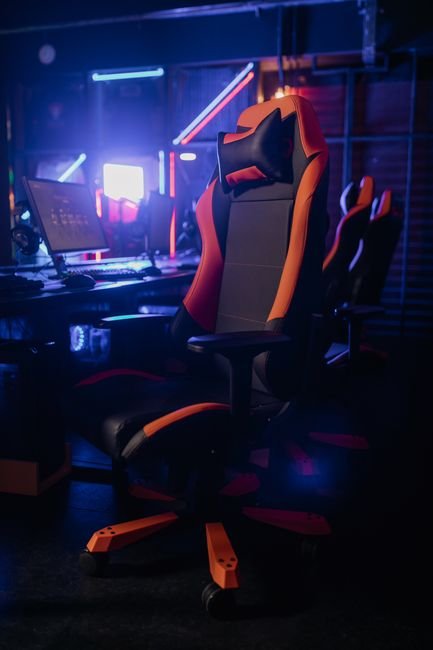
Gaming chairs get a lot of hate from ergonomics people. Some of it is fair.
An equally priced office or task chair almost always beats a gaming chair on pure ergonomics. That’s not a controversial take anymore, it’s close to consensus. But “worth it” is not the same question as “most ergonomic,” and for a lot of gamers, a gaming chair is still the right call.
Here’s the honest breakdown.
Gaming Chair vs Office Chair — Quick Comparison
| Criteria | Gaming Chair | Office/Task Chair (same price) |
|---|---|---|
| Lumbar support | Detachable pillow, loses shape over time | Built-in, adjustable, holds position |
| Build quality | Good at premium tiers, weaker at budget | Generally stronger at the same price |
| Recline range | Wide, often 130–180° | Narrower, task-focused |
| Long-session comfort | Strong, designed for it | Strong, but less “lounge” feel |
| Aesthetics | Racing-seat look, RGB-friendly setups | Plain, professional |
| Long-term value | Lower at budget tiers | Higher at the same price point |
How We Looked at This
- We compared against equally priced alternatives: a $150 gaming chair against a $150 office chair, not against nothing.
- Lumbar design mattered more than lumbar marketing: a pillow you strap on is not the same as lumbar support engineered into the frame.
- We separated gaming comfort from ergonomic correctness: a chair can feel great for six hours and still be doing your spine no favors.
- Use case changed the answer: someone gaming three hours a night has different needs than someone sitting eight hours doing focused work.
- We did not treat aesthetics as irrelevant: if you want the setup to look a certain way, that has real value too, even if it’s not ergonomic value.
Where Office Chairs Actually Win
Lumbar support is the biggest gap. Office chairs are built from the ground up around spinal support, with contoured frames and adjustable lumbar systems that stay in position. Gaming chairs mostly rely on a detachable pillow strapped to the seat back. It works fine at first. It also goes flat over time and needs to be repositioned constantly to keep doing its job.
At the same price point, an office or task chair also tends to have better build quality. The materials, the mechanisms, the adjustability, all of it generally holds up better and offers more genuine functionality per dollar than a gaming chair at that same price.
If most of your day is focused work, calls, writing, spreadsheets, an office chair is very likely the better buy, even if you also game on it in the evening.
Where Gaming Chairs Still Make Sense
Gaming chairs are not built for a desk job. They’re built for long, mostly stationary sessions where you want to lean back, relax between rounds, and not think about posture correction while you’re focused on a game.
The wider recline range, often 130° to 180° versus a much narrower range on task chairs, is a real feature for someone who wants to fully kick back during a loading screen or between matches. Premium gaming chairs in 2026 have also closed a lot of the ergonomic gap: better lumbar systems, sturdier frames, and less reliance on a flimsy pillow than budget models from a few years ago.
And the aesthetics genuinely matter to a lot of people. If you want your setup to look a certain way and a racing-seat chair fits that better than a plain task chair, that’s a legitimate reason to buy one. It’s just not an ergonomic reason.
The Honest Verdict
A well-designed chair from either category beats a cheap one from the other. That’s the real rule, more than gaming versus office.
If you’re buying purely for ergonomics and budget is the constraint, an office or task chair at the same price will usually treat your back better. If you’re buying for long gaming sessions specifically and want the recline, the look, and don’t mind repositioning a lumbar pillow occasionally, a gaming chair is still a reasonable, worthwhile purchase. It is not the ergonomic upgrade the marketing suggests. It is also not the scam some corners of the internet make it out to be.
Either way, spend real money on the chair. This is one component where the cheapest option in either category is genuinely a bad idea.
Frequently Asked Questions
Are gaming chairs bad for your back?
Not inherently, but the detachable lumbar pillow most rely on loses its shape over time and needs regular repositioning to keep helping. A quality office chair’s built-in lumbar support tends to hold up better long term.
Should I buy a gaming chair or an office chair?
If most of your time in the chair is focused work, an office chair at the same price is usually the better ergonomic choice. If it’s mostly long gaming sessions and you want the recline and look, a gaming chair is a fair pick.
Do expensive gaming chairs solve the ergonomic problem?
Largely, yes. Premium gaming chairs in 2026 have closed much of the gap with sturdier frames and better lumbar systems. The comparison gets much closer at higher price points than it is at the budget tier.
Is it worth spending more on a chair in general?
Yes, more than almost any other setup component. You sit in it for every session, and the cheapest option in either category tends to be a poor long-term investment.
Can I use a gaming chair for work too?
Yes, plenty of people do. It’s not the ideal ergonomic choice for eight hours of focused desk work, but it’s a livable one, especially at premium price tiers.
Building the rest of your setup on a budget? See our gaming setup on a $500 budget guide, or check best gaming accessories under $50.
If you’re weighing this decision, it’s also worth reading Gaming Chair vs Office Chair — Settled (2026).
This pairs well with our guide, Best Gaming Chairs for Comfort in 2026 — Tested.


4 thoughts on “Is a Gaming Chair Actually Worth It?”